Silver Lotus Holistics

Swedish / Holistic Massage
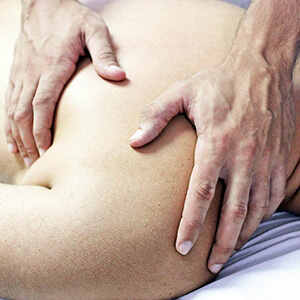
Swedish Holistic Massage

This is your everyday classic massage, and is the base point for every other variation of massages that exist.

It uses a combination of light and firm pressure, and long and short strokes, as well as other techniques, such as kneading.

This massage focuses on massaging the superficial layers of the body, and pressure shouldn’t reach further than what is known as the fascia (connective tissue that surrounds all your organs, bones, tendons, ligaments and muscles).

Swedish massage is a great all-round relaxing treatment.

Prices

Back, neck & shoulders

  • 45 minutes
    £45

Full body

  • 75 minutes
    £65

Pressure Points


These are points on the body that when pressure is applied, may offer relief to a specific area of the body.

Pressure points can be stimulated by using gentle pressure with the fingers, and held for anywhere from 10 seconds - 3 minutes.

This will close in 0 seconds

Techniques


This refers to the various different ways that are used by the therapist to carry out your treatment, such as:

  • Effleurage: this is used to warm up and stretch out the muscles. It is the basis for all massages, and is commonly used at the beginning of a treatment.  It is very relaxing, and comprises long, slow and lengthening movements with flat hands and fingers.
  • Petrissage: These include kneading, and skin rolling - anything that lifts the skin up and will help to break up the tension.
  • Friction: the thumbs are used in a back-and-forth motion on a small tight area to increase blood flow.
  • Vibration: using the hand to gently shake an area of tension.
  • Tapotement: includes hacking (with the sides of the hands in chopping motion) or cupping (making concave shapes with the hands to create a light suction, to increase blood flow to an area).

This will close in 0 seconds

Kneading


This is a petrissage technique that involves kneading the skin and soft muscle tissue, almost as if you were kneading bread dough.

It encourages blood flow and lifts the muscles fibres to encourage any tension to break up.

Kneading is soft enough to be relaxing, but also firm enough to encourage the start of breaking down the tension, and to prepare the muscles for any further deeper work needed to be done.

This will close in 0 seconds

Fascia


Think of fascia as a big piece of clingfilm. This 'cling film' covers all your organs, bones, nerves and muscles to protect and hold them in place.

When we do a classic Swedish massage for relaxation purposes, we are only massaging the superficial layers of the fascia.

When we do a deep tissue massage, the therapist has to break through the rest of the fascia in order to reach the muscles to where the knots and areas of tension are.

Healthy fascia is flexible and stretchy, which is why when you feel tight, and have limited range of motion, it is an indication that you need to lengthen and loosen it up.

This will close in 0 seconds

Knots


Knots are when the muscle fibres form a tight cluster that are tender and painful, and can decrease range of motion, which in turn causes a decrease in blood flow.

Knots, also known as trigger points, need something like a deep tissue massage to help work them out.

Trigger point therapy can be used on a knot to help oxygenate the area and increase the blood flow to the area - this is what helps break them down.

There is also a debatable theory that perhaps muscle knots contain lactic acid, and this is what forms the hard like knob that you can feel under the skin.

When trigger point therapy is used, this crystallization breaks down, because oxygenated blood can now flow to the area, and oxygen helps to break down lactic acid.

This will close in 0 seconds

Myofascia Release Techniques


Myofascial release can be used on its own or else as an addition to a deep tissue massage.

These techniques are performed incredibly slowly, and when used in conjunction with a deep tissue massage, can be used at the start of the treatment to relax the fascia in order to assist in breaking through it more easily.

Myofascial release helps increase the range of motion, and can help to decrease pain.

Myofascial Release is said to be the missing link in deep tissue massage, and can also be used for people who cannot cope with the deeper and often painful pressure of a full-on deep tissue massage, as it's non-invasive and actually very relaxing.

However, as mentioned before, this massage is done at a very slow, detailed and controlled pace, and requires a lot of patience, both from the therapist and the recipient.

This will close in 0 seconds

How does Deep tissue Massage differ from Sport Massage?


Deep Tissue and Sport Massage are very similar in the fact that they both are aimed at reducing pain, tension and increasing range of motion, however they also have slight differences.

Deep Tissue massages usually focus on a larger surface area, such as the back, neck and shoulders, or even the full body, whereas a Sport Massage tends to focus on a localized area, such as an athlete's calves or hamstrings.

Sport Massage is also most commonly used by people who do a lot of sport related activities. This is not to say that a non-sporty person cannot have a sport massage, but sport massage is generally used for sport related injuries, pre-activity, post-activity and maintenance.

The other difference is that sport massage therapists require more in-depth training to be able to deal with sport related issues.

This will close in 0 seconds

Oedema


This is a type of acute swelling that occurs when there is too much fluid in the tissues.

It usually occurs after something like travelling for long periods, pregnancy, sedentary lifestyles or surgery.

Manual lymphatic drainage can help with this.

This will close in 0 seconds

Lymphedema


This is a chronic and incurable condition that occurs when the lymphatic system has failed.

This results in a build-up of lymph in the tissues, resulting in swelling in most commonly the legs and arms, but can also happen in other areas.

Lymphedema can be caused by illnesses such as cancer, but can also occur in obese people or people who lead very sedentary lifestyles.

Lymphedema can be managed by having regular manual lymph drainage treatments, but a person with this condition needs to be under the care of a lymphedema specialist who can diagnose the condition and help you manage it properly.

This will close in 0 seconds

Lymph Nodes


These are your little filtration areas where lymph is drained from. In a manual lymph drainage massage, this is where we direct all the fluid to, where it is 'filtered' and cleaned of any waste before being drained back into the bloodstream.

They are composed of white blood cells, which also aid in good immunity.

This will close in 0 seconds

Fibrosis


This is the thickening and scarring of tissue at a surgery site.

They resemble lumpy bits that can occur after surgery.

This will close in 0 seconds

What is the difference between a trigger point and a pressure point?


Trigger points are subject to an individual, meaning that where one person feels stiffness and pain, the next person may not.

Trigger points also create a referred pain when pressed.

Pressure points are generalised points on everyone and are deeply related to Traditional Chinese medicine and used to restore balance and alleviate common ailments like anxiety or headaches.

Very often, these trigger and pressure points can overlap one another.

This will close in 0 seconds